
Medium-intensity Obstruction Lights: Bright Beacons for Air Safety
As the sun sinks below the horizon, the hundred-meter-high wind turbines gradually disappear into the twilight. A row of special warning lights illuminates simultaneously at different heights on the towers, their alternating red and white flashes piercing the night sky, alerting passing aircraft.
At nightfall, the white aviation lights on the wind turbines flash approximately 20-60 times per second, with a light intensity exceeding 20,000 candela, making them clearly visible even during the day.
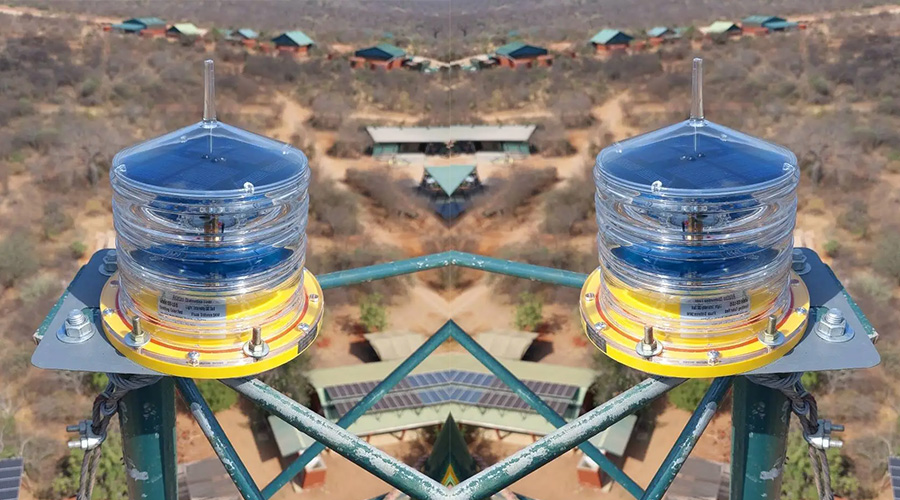
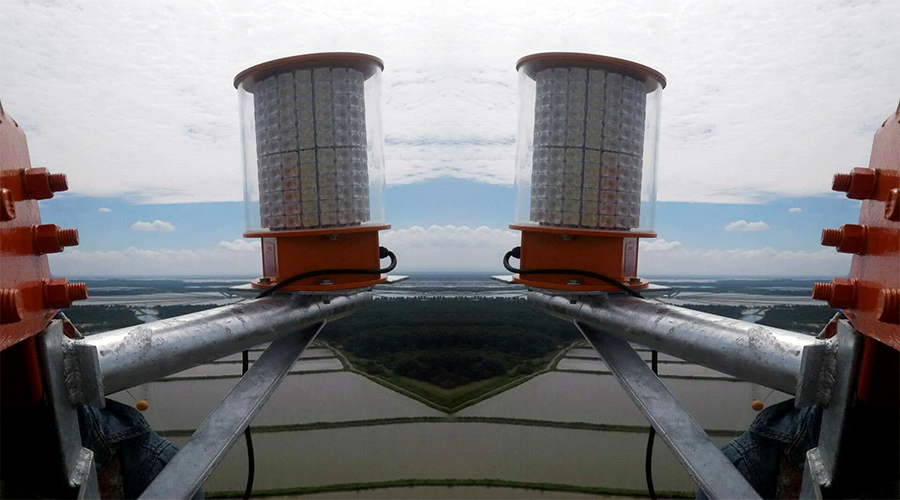
This is the medium-intensity aviation obstruction light at work, specifically designed to provide reliable aerial warnings for obstacles between 105 and 150m in height. For example, the YFFY-MI-B2 medium-intensity obstruction lights.
Applications of Medium-intensity Obstruction Lights
01.Building Safety
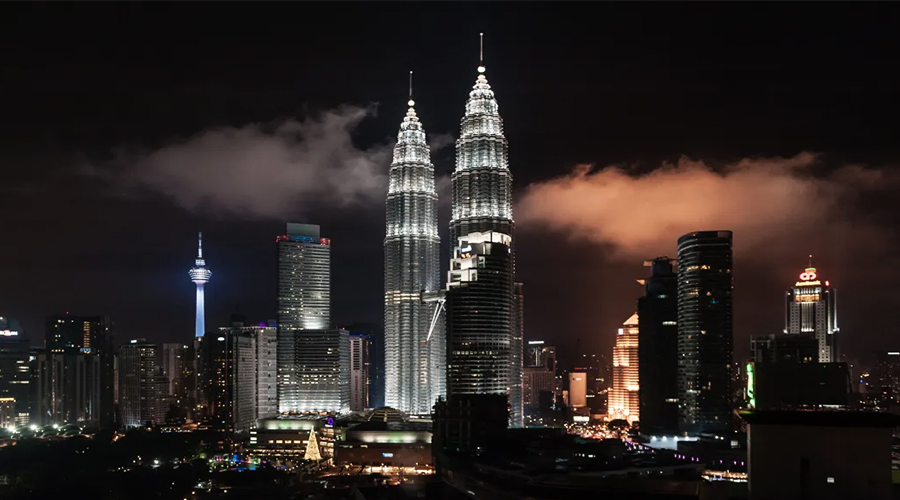
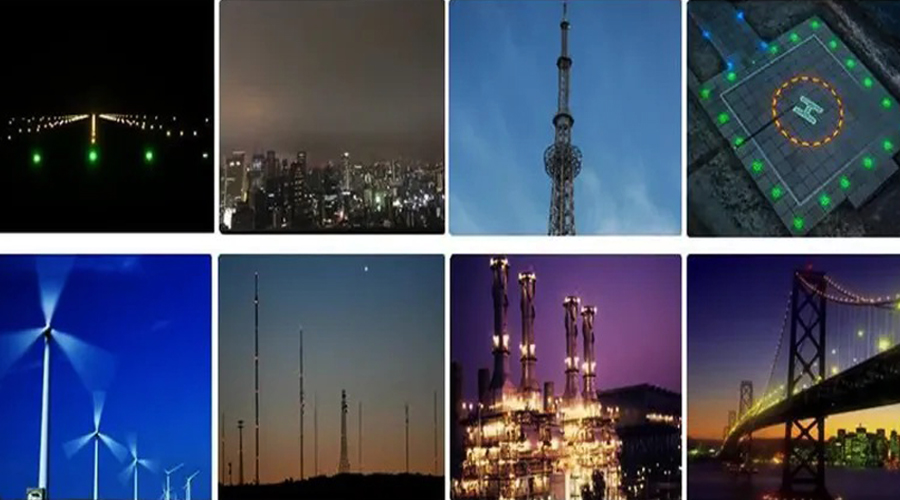
- Medium-intensity aviation lights play a crucial role in the safety systems of urban high-rise buildings. Installed on building rooftops or protruding structures, they provide clear obstacle warnings to aircraft, preventing mid-air collisions.
- According to international standards, medium intensity light systems must be installed on buildings exceeding 150m in height. For buildings 105-150m in height, low-intensity obstruction lights are typically used in conjunction with these lights to create a comprehensive warning system at different heights.
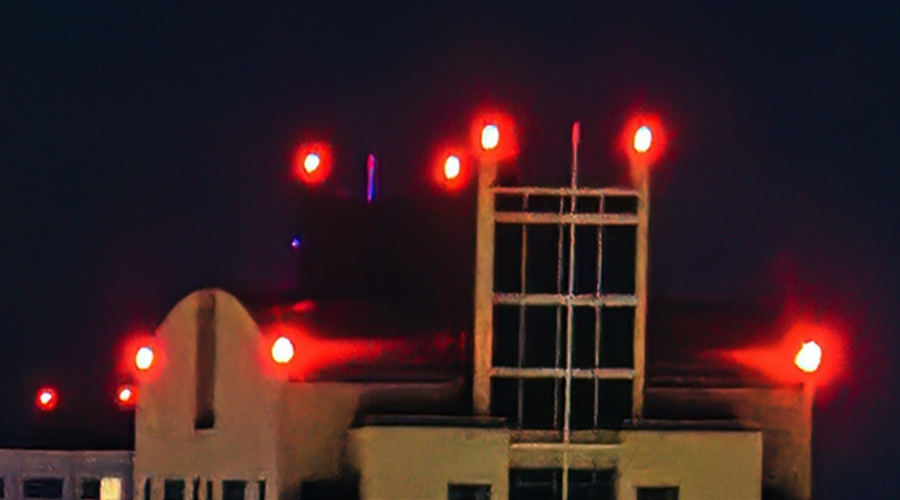
- Medium-intensity Type B obstruction lights employ a “white during the day, red at night” illumination mode, automatically switching according to ambient light. This dual-color system ensures that obstacles are clearly identifiable by aircraft, whether in bright sunlight or darkness.
02.Industrial Facility Warning
- Tall facilities in industrial production also require the protection of medium-intensity obstruction warning lights.
- These industrial facilities are often located in relatively open areas, but their height poses a threat to low-flying aircraft.
- Tall chimneys are a common application scenario, especially in the petrochemical, power, and metallurgical industries.
- These facilities often exist in isolation and can easily become aviation safety hazards under poor visibility conditions.
- The installation of medium-intensity aircraft warning lights provides all-weather aerial warning for these industrial facilities.
- Large lifting machinery used in ports and construction is another key application area. These machines are considerable in height and can pose a risk to helicopter and seaplane takeoffs and landings.
- Obstruction lights need to withstand the high salt spray corrosion of marine environments and resist extreme temperatures while maintaining stable operation.
03.Infrastructure Protection
- Infrastructure such as bridges, power towers, and communication towers also require the protection of medium-intensity obstruction lights. These structures often span vast areas and are considerable in height, posing a potential risk to aviation safety.
- For large bridges, especially the towers of suspension and cable-stayed bridges, there are strict regulations regarding the installation location and number of obstruction warning lights.
- It must be ensured that aircraft approaching the bridge from any flight direction can see sufficient warning lights to form a complete obstruction outline.
- Communication towers and television towers are typically located on high ground or in urban centers, and can reach heights of hundreds of meters. These tower-like structures require multiple sets of obstruction lights at different heights for marking, ensuring that aircraft can clearly identify the extent and height of the obstruction at night or in low visibility conditions.
04.Wind Farm Warning
- Wind farms are one of the important application scenarios for medium-intensity obstruction lights.
- Wind turbines are typically concentrated in open areas, with individual towers reaching heights of 80-150m. Including the rotating blades, the total height can exceed 200m.
- In wind farms, obstruction light systems require a special synchronized flashing pattern. All high-altitude obstruction lights within the same wind farm must flash synchronously to avoid confusing pilots. Advanced GPS synchronization technology ensures millisecond-level synchronization across a range of several kilometers.
- Considering the unique environment of offshore wind farms, these obstruction lights also require higher protection levels and corrosion resistance.
- Offshore wind farm aviation obstacle light systems are typically powered by solar energy or submarine cables to ensure continuous operation in harsh marine environments. For example, the YFFY-MI-B2 high-intensity obstruction light is widely used.
05.Technical Standards and Specifications
- The design and manufacture of aviation lights must strictly adhere to international aviation standards. ICAO Annex 14 and the US FAA L-864 standard are recognized authoritative industry specifications, covering the light intensity, color, flashing frequency, and installation requirements of aviation lights.
- According to these standards, medium-intensity Type B obstruction lights must have an effective luminous intensity of over 20,000 candela during the day, 2,000-20,000 candela at dusk and dawn, and 2,000 candela at night. This intensity classification ensures the visibility of high-altitude obstruction warning lights under different lighting conditions.
- The flashing frequency is typically set to 20-60 times per minute, but the specific frequency can be adjusted according to the application environment and the requirements of local aviation authorities. Some advanced systems also support remote monitoring and intelligent control, adjusting their operating status in real time to adapt to weather changes.
06.Special Application Scenarios
- In addition to traditional applications, medium-intensity obstruction lights also appear in some special scenarios.
- Temporary tall structures such as large tower cranes and construction cranes require temporary obstruction light systems during construction. These systems are usually portable, facilitating installation and dismantling.
- Mountain cableway and cable car systems are also application areas for obstruction lights. Cableway towers may be located below or near flight paths, requiring appropriate aerial warning.
- In this case, the obstruction light design needs to consider the special climatic conditions of mountainous areas, such as low temperatures, strong winds, and high humidity.
The above outlines the standards and requirements for aviation obstruction light applications. AC and solar warning lights series are available upon request. Please feel free to contact YFFY for recommendations if you have any specific needs.