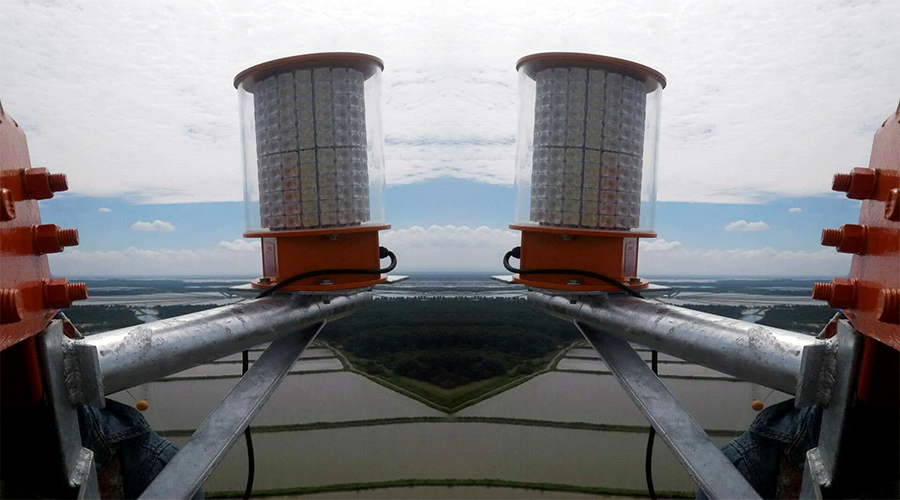
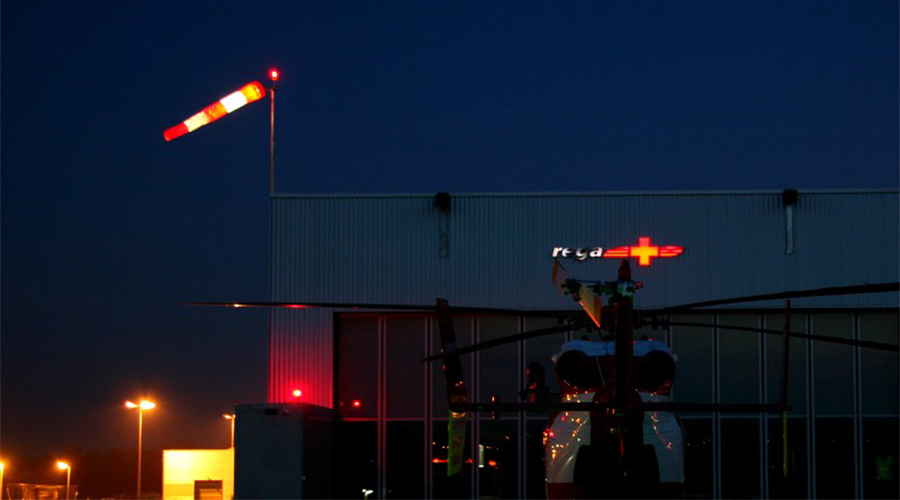

Medium-intensity lights are a type of aviation obstruction light. Their installation standards are primarily based on the relevant regulations of the Civil Aviation Administration of China (CAAC) and the International Civil Aviation Organization (ICAOC), ensuring that aircraft can clearly identify obstacles in low visibility or nighttime conditions.
Below is a detailed explanation of the core installation standards; let’s discuss and understand them together.
Installation Requirements for Medium-intensity Lights
- Luminous Intensity & Color
- Luminous Intensity: The flash intensity of medium intensity lights must meet the standard level (usually 2000 cd to 20000 cd).
- Color: White flashing (daytime/dusk) or yellow/red flashing (adjusted according to background brightness).
- Installation Location & Quantity
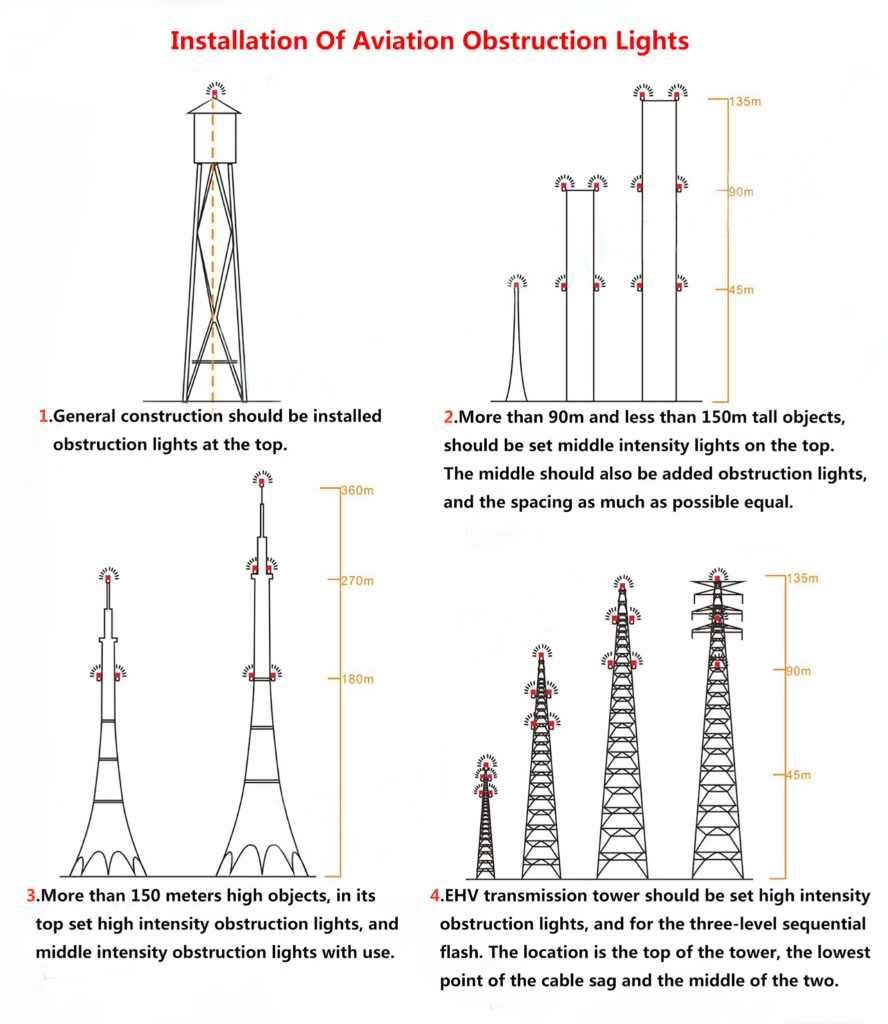
- Top: Must be installed at the highest point of the obstacle.
- Middle Layer: If the obstacle height > 45m, medium-intensity aircraft warning lights must be installed in the middle layer, with a spacing not exceeding 45m.
- Building complexes or towers must ensure that at least one medium-intensity lights is visible from any azimuth.
- Outline Marking: Aviation obstruction lights must be installed on the top edge or protruding structures of the obstacle to outline its shape.
- Installation Method
- Fixed Bracket: Must be wind and earthquake resistant (wind resistance rating ≥ local maximum wind force).
- Lightning Protection Grounding: Complies with the “Code for Design of Lightning Protection of Buildings” (GB 50057).
- Protection Rating: The protection rating of the aviation obstruction lights shall not be lower than IP65 (dustproof and waterproof).
- Flashing Characteristics
- Frequency: 20 ~ 60 times/minute (usually 40 times/minute).
- Synchronized Flashing: Multiple aviation obstruction warning lights must flash synchronously (achieved through a GPS synchronization controller).
- Visibility Requirements
- Daytime: Visible at least 5 km.
- Dusk/Dawn: Automatically switches between medium light intensity mode.
- Night: Can reduce light intensity or switch to red to avoid light pollution for residents.
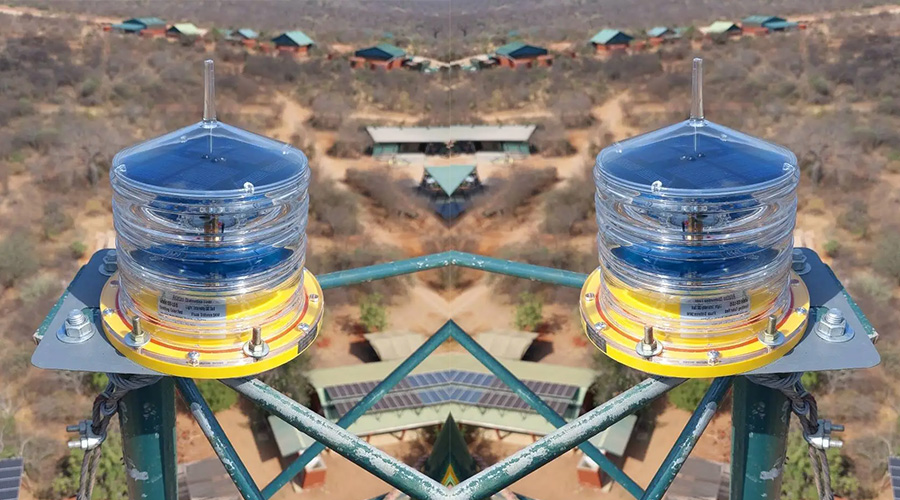
- Alternatively, a solar aviation obstruction warning light is available, which automatically charges during the day and operates at night. Range selectable from 5-10 km.
| Items | Requirements and Standards | Corresponding Product Solutions |
| Applicable Height | Obstacles ranging from 45 to 150 meters (such as iron towers, chimneys, and tall buildings). | The YFFY-MI/A, YFFY-MI-B2, and YFFY-155LED series all cover this range. |
| Light Intensity & Color | Light intensity: 2000cd to 20000cd. Color: White/yellow flash (day/dusk). | Parameters meet standard light intensity ratings; some models support three colors (YFFY-HP/BS) to adapt to different environments.) |
| Installation & Spacing | Top-mounted installation is mandatory; Spacing between intermediate layers ≤ 45 meters; Outline markings required. | Multiple mounting bracket options are available; they can be combined to achieve multi-layered, all-around coverage. |
| Flash Characteristics | Frequency: 20-60 flashes/minute; Synchronized flashing required. | Most products have built-in or external synchronization controllers to ensure synchronized operation of multiple lamps. |
| Use Environmental Considerations | Protection level ≥ IP65; Wide temperature range (e.g., -40℃ to +50℃); Lightning protection required. | Feature high protection and wide temperature range; solar-powered models (YFFY-700, YFFY-LS-C-1) are suitable for scenarios without mains power. |
| Control & Maintenance | Automatic light-controlled switching required; Remote monitoring recommended; Regular inspection. | LED lights include a photosensor; an optional intelligent monitoring module is available for easy maintenance. |
Application Scope of Medium Aviation Obstruction Lightis
Medium intensity obstruction lights (usually yellow/white flashing lights) are suitable for:
Obstacles in vast open areas or complex background lighting environments.
Obstacles 45 to 150 meters high (such as high-voltage towers, chimneys, and tall buildings).
Frequency: 20-60 flashes/minute;
Synchronized flashing required.
The middle section of buildings over 105 meters high (used in conjunction with high-intensity lights).
Obstacle Warning Light Electrical & Control Requirements
1. Power Supply:
Dual power supply or backup power (e.g., UPS) to ensure uninterrupted operation.
2. Control System:
- Equipped with a photosensitive sensor to automatically switch modes based on ambient brightness. Solar-powered lights operate automatically at night.
- Supports GPS synchronous monitoring and fault alarms.
3. Wiring:
Cables must be flame-retardant, high-temperature resistant, and protected by metal conduits (for lightning and corrosion protection).
Aviation Light Maintenance and Inspection
- Regular Inspection: Monthly inspection of aviation obstacle warning lights, lens cleaning, and wiring checks.
- Flight Calibration: New/modified obstacles must be inspected and approved by the aviation authorities.
- Record Filing: Maintenance records must be kept for at least 2 years.
Precautions for Medium-intensity Lights
- Avoid Glare: Adjust the angle to avoid direct light on pilots or residential areas.
- Bird Protection: In migratory bird routes, the impact of lights on birds must be assessed.
- Local Regulations: Must also comply with local government regulations regarding high-altitude obstacles.
The installation of medium-intensity aviation obstruction lights must strictly adhere to the principle that “height determines type, background determines color, and environment determines mode.”
It is recommended to communicate with civil aviation authorities during the planning and design phase to ensure compliance with regulations such as the “Management Measures for the Airspace Protection Zone of Civil Airports,” thereby guaranteeing aviation safety and obstruction compliance.