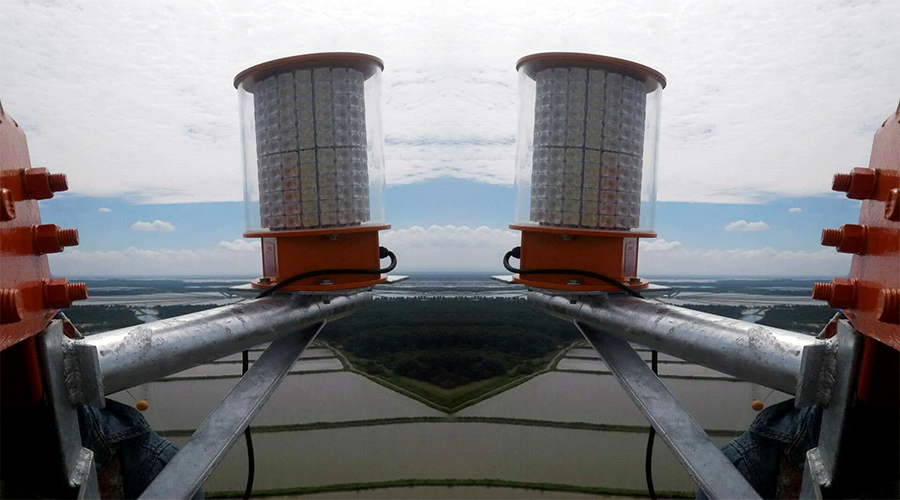
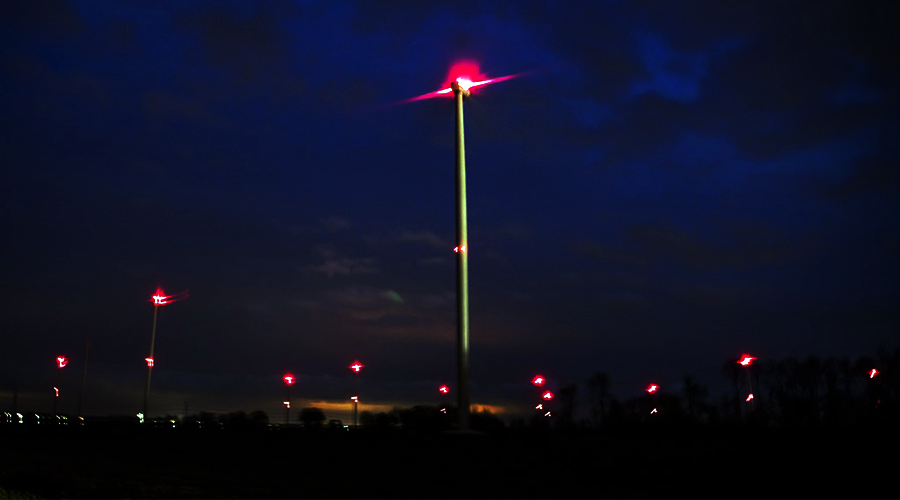

Aviation warning lights, as the name suggests, are aviation obstruction warning lights. When selecting low-intensity and medium-intensity obstruction lights, the following key factors are crucial: obstruction height, airspace environment, international/national regulations, and whether all-weather operation is required.
The following will explain from three aspects: technical standards, application scenarios, and selection recommendations for your reference.
I. Standards for Aviation Warning Lights
1. Low-Intensity Aviation Obstruction Lights
- Intensity Range:
Typically ≤ 32 candela (cd), solid red or flashing.
- Applicable Standards:
ICAO Annex 14 (International Civil Aviation Organization, Airport Design and Operation) stipulates: for obstructions with a height of less than 45 meters. [1]
FAA AC 70/7460-1L (Federal Aviation Administration Advisory Circular) recommends: suitable for low-rise structures in urban areas that do not protrude from the skyline. [2]
- Features:
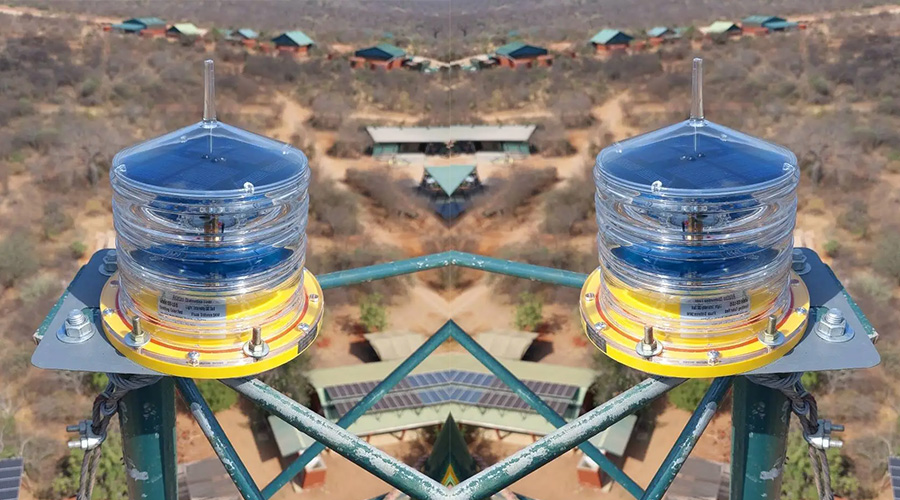
Low power consumption, mostly LED or solar-powered, suitable for nighttime use.
Product Reference: Low Intensity Aviation Obstruction Light Series
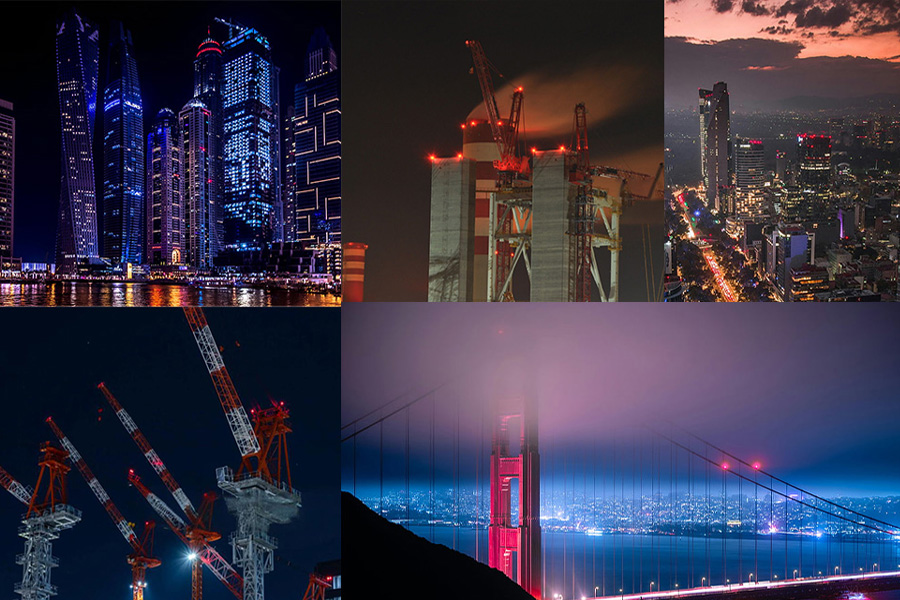
Obstruction Warning Light Application Demonstration:
2. Medium Intensity Aviation Obstruction Light
- Intensity Range:
Type A (White Flash): Peak ≥ 2,000 cd (Day/Dusk)
Type B (Red Flash): Peak ≥ 2,000 cd (Night Only)
- Applicable Standards:
ICAO Annex 14 recommends use for obstacles at heights of 45 to 150 meters.
If the obstacle is located near an airport or on an approach runway, even if it is below 45 meters, the use of medium intensity lights may be mandatory.
- Features:
Requires automatic switching between day and night modes with a light controller; some models support dual modes: solar aviation obstruction light + AC LED obstruction light.
Product Reference: Medium Intensity Aviation Obstruction Light Series
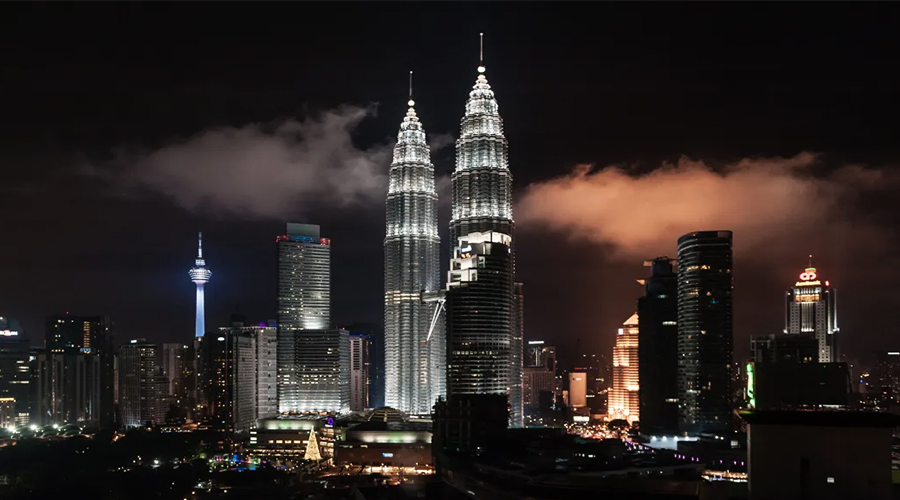
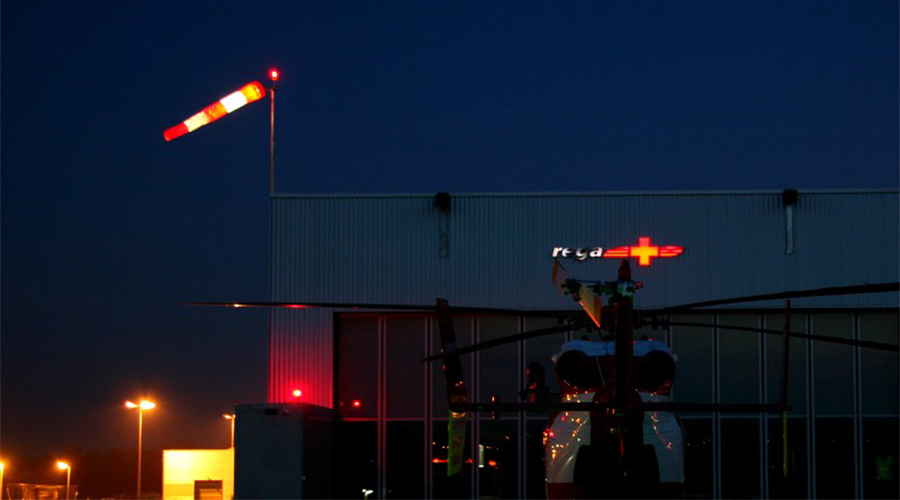
Medium Intensity Obstruction Warning Light Application Demonstration:
II. How to Select Aviation Obstacle Lights
| Factors | Low-intensity Lights Suitable Scenarios | Medium-intensity Lights Suitable Scenarios |
| Obstacle Height | < 45 meters | 45 – 150 meters |
| Geographical Location | Long distance from airports and non-critical airspace | Located near airports, flight paths, and navigation-sensitive areas |
| Regulatory Requirements | Meets basic nighttime visibility requirements | Must comply with ICAO/FAA mandatory lighting requirements for medium-to-high obstacles |
| Power Supply Conditions | Solar energy is sufficient, i.e., Solar obstruction lights | May require a stable power supply or a high-capacity solar obstacle warning light system |
| Cost | Low cost (equipment + installation + maintenance) | Higher requirements (requires light-controlled, higher-brightness LEDs, and more complex structures) |
- Note: Some countries (such as China) also clearly define the lighting requirements for obstacles at different heights in their Civil Aviation Air Traffic Management Regulations and the MH/T 6012-2015 Aviation Obstruction Lights standard, which are basically consistent with ICAO.
III. Recommendations for Aviation Warning Lights Application
- Communication towers, wind turbines, chimneys (>60 meters):
Medium-intensity lights (usually white flashing Type A, operating day and night) are required.
- Rooftop equipment, small billboards, low-rise buildings (<30 meters):
Low-intensity red lights are sufficient, especially in urban light pollution environments.
- Hybrid solution:
For towers around 100 meters, a layered lighting approach of “medium-intensity at the top + low-intensity in the middle” is often used to enhance outline visibility.
Whether choosing low-intensity or medium-intensity aircraft warning lights, the core considerations are the obstacle height, the regulatory requirements of the airspace, and whether AC or solar powered aviation warning lights are required.
Please be sure to follow the specific regulations of your local civil aviation authority and prioritize products that comply with international certifications such as ICAO L810 / FAA L-864 to ensure compliance and flight safety.
References:
[1] ICAO Annex 14, Volume I – Aerodrome Design and Operations, 8th Edition, 2023.
→ Section 6.2: Obstacle Restriction and Identification Surfaces; Section 7.2: Obstruction Lighting.
[2] FAA Advisory Circular 70/7460-1L, “Marking and Lighting of Structures”, 2022.