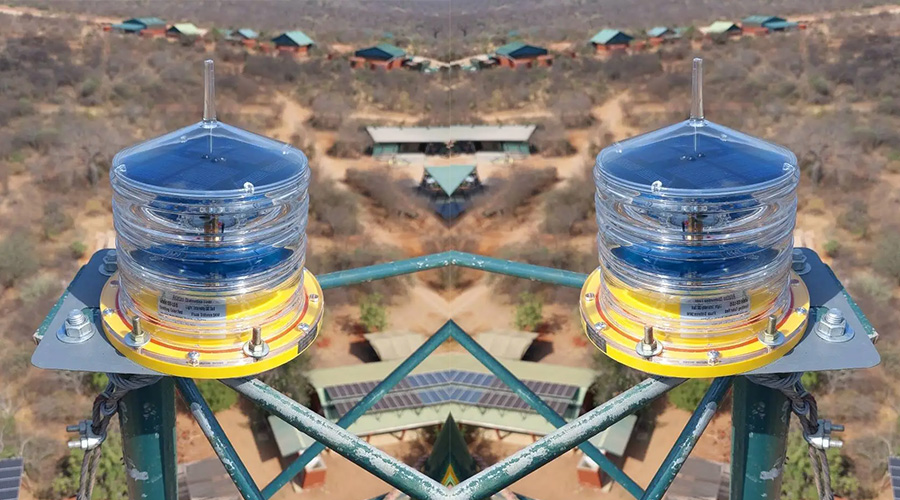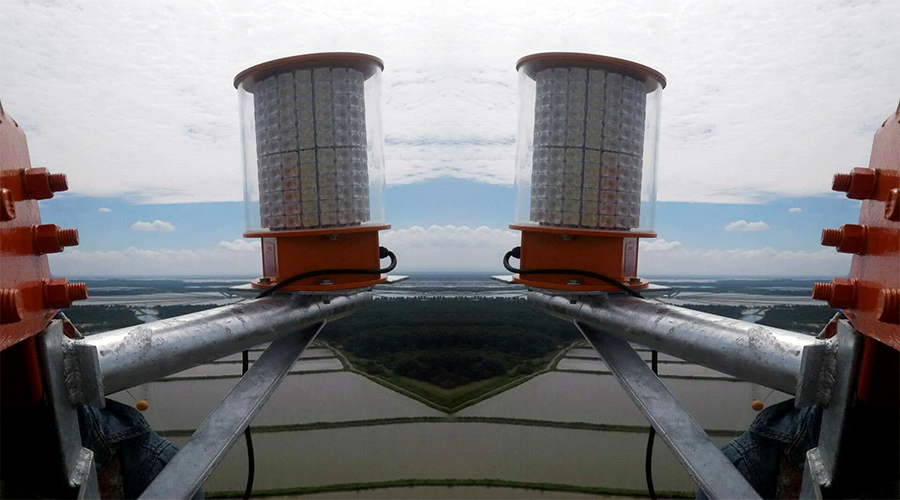
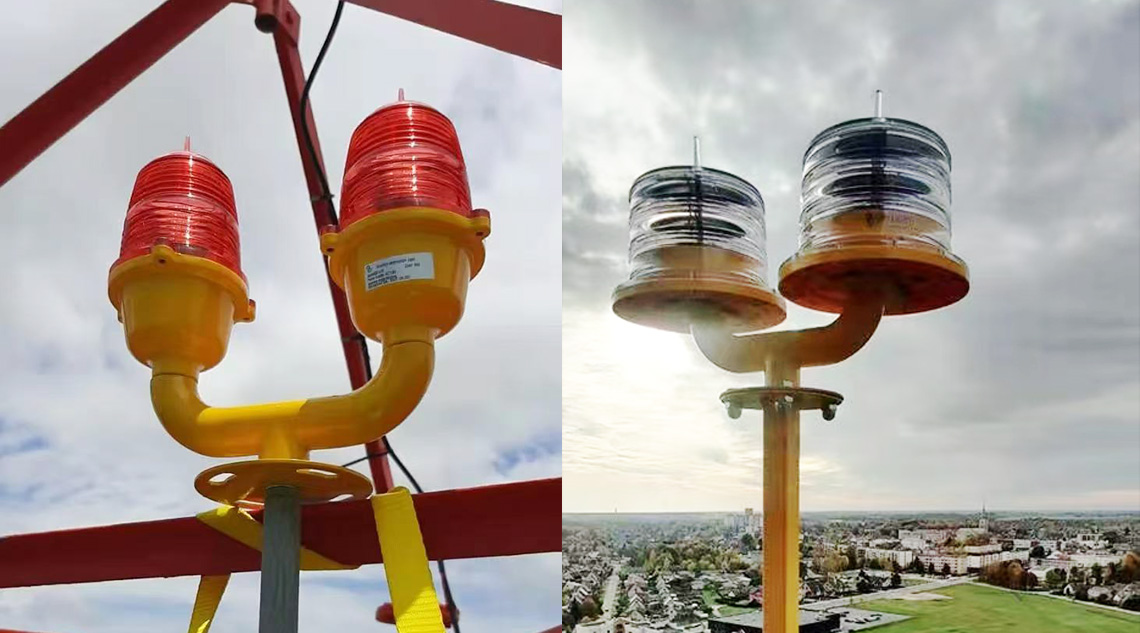

Dual-head solar obstruction lights are usually used for aviation warnings, with the characteristics of low power consumption and long life. There are various installation methods, including integrated design and split design.
The solar panel is efficient, and the lampshade material is corrosion-resistant and UV-resistant. This obstacle warning light is suitable for towering structures such as towers and is used for aviation warning.
Installation of Dual-head Solar Obstruction Lights
Whether it is on high-rise buildings, tower tops, or other places where high-altitude obstacle warnings are required, when installing double-head solar obstruction lights, in order to ensure its normal operation and effective warning, let us understand together.
1. Choose a suitable installation location
- Height: Make sure the light is installed on the top of the tower or a suitable high point to enhance long-distance visibility.
- Orientation: Aviation warning lights should face open areas to avoid obstructions that block light.
- Light obstruction: Avoid tall buildings or other obstacles nearby that block light and solar panels.
2. Ensure good solar charging conditions
- Avoid shadows: Make sure the panels of solar obstacle lights receive sufficient sunlight every day to avoid shading.
- Regular cleaning: Keep solar panels clean to prevent dust, bird droppings, etc. from affecting efficiency.
3. Firm installation, windproof and earthquake-resistant
- Use a sturdy bracket or fixing frame to ensure that the solar light is not easy to shake or fall off in wind or bad weather.
- Connection tightening: screws, clamps, etc. should be tightened firmly to avoid looseness.
4.Consider wires and connections
- If there is a line connection, ensure that the wiring is correct and there is no short circuit or poor contact.
- Use waterproof and corrosion-resistant terminal blocks to improve durability.
5. Ensure a reasonable light angle
Adjust the light angle to ensure that the light coverage of the solar aviation obstacle warning light is maximized, while avoiding light scattering that interferes with the human eye.
6. Maintenance and inspection
- Regularly check the working status of the solar warning lights to ensure that the battery is fully charged and the light brightness is normal.
- If it is not used for a long time, the LED solar lights should be charged once every 2-3 months.
- Check the brackets and fixtures to ensure that they are not loose.
7. Comply with relevant safety standards
Comply with local electrical and building safety regulations to ensure safe installation.
Whether it is a dual-head solar obstruction lights or other solar high-altitude obstruction lights or AC series aircraft warning lights, you can also choose the appropriate product for installation according to the standards of low, medium and high light intensity.
Feel free to contact us for solar aviation obstruction lights recommendations and solutions.