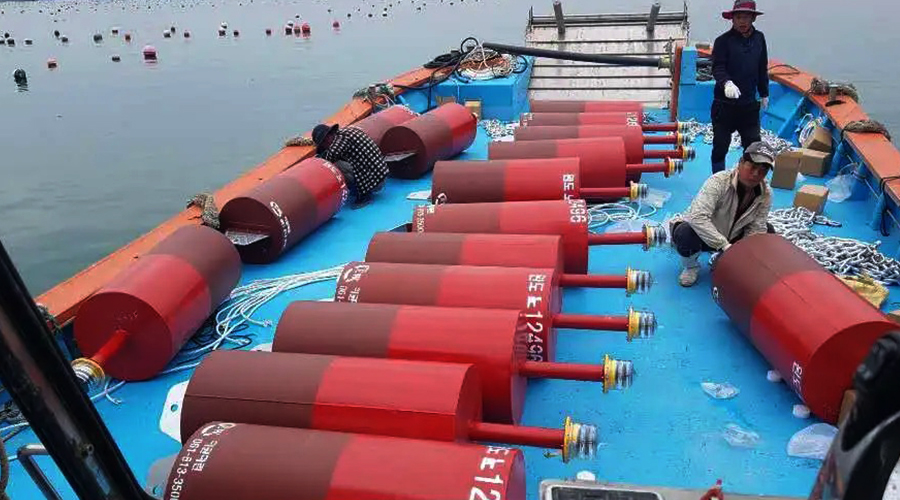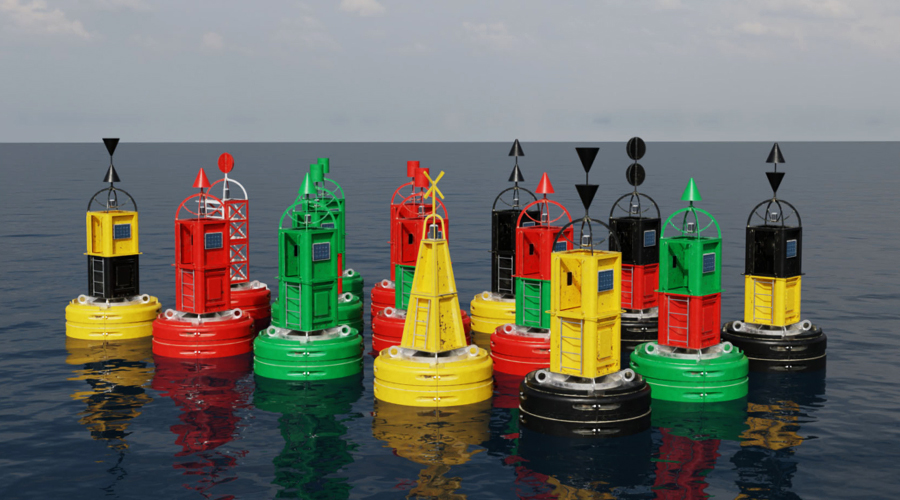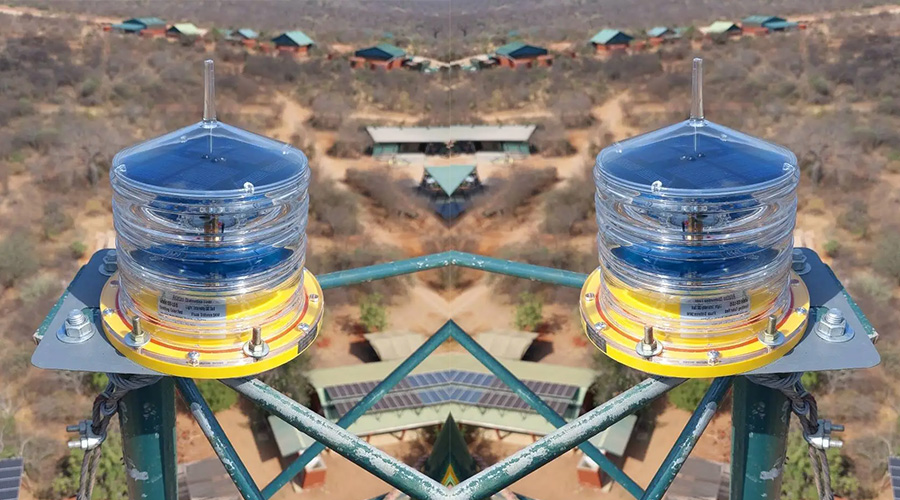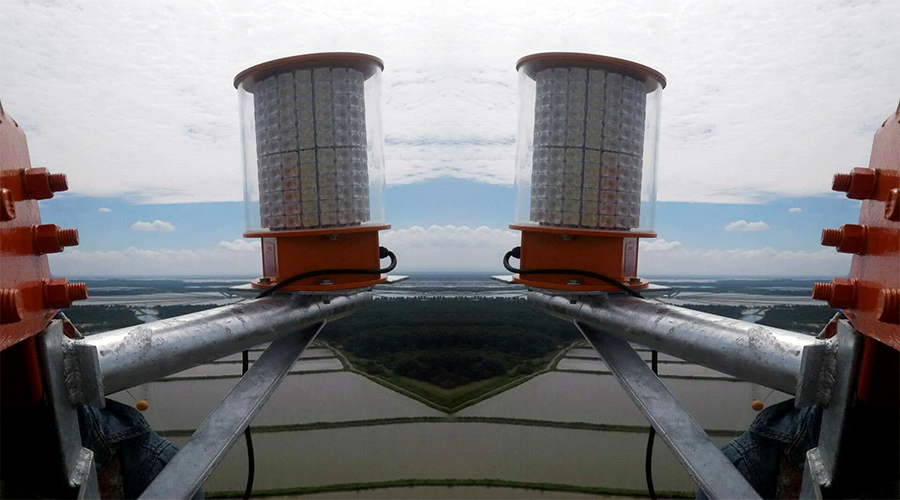
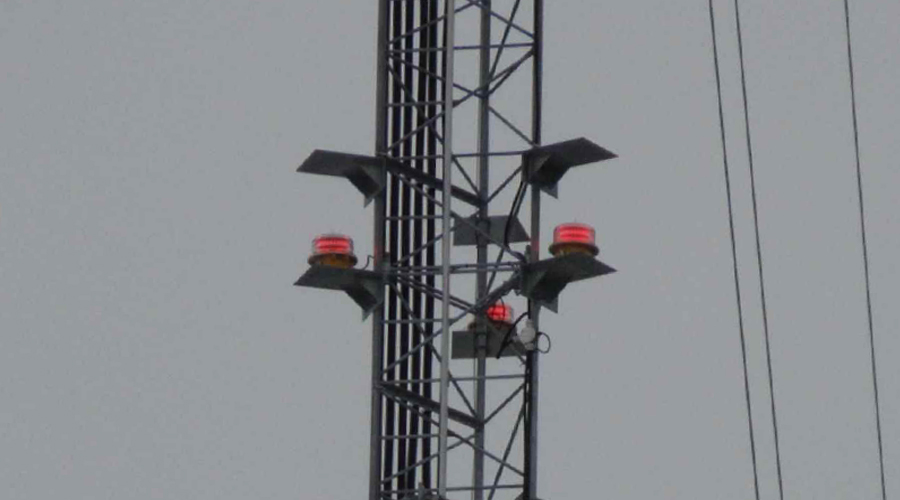

Solar obstacle warning lights is a warning light powered by solar energy. It is commonly used in aviation, construction, road construction and other fields to warn of obstacles.
There are many types of solar obstruction lights in application, including low-intensity and medium-intensity types, which can be selected according to needs. These LED lights are usually designed as flashing lights to improve visibility at night. Or they can be constantly lit and in other colors according to needs.
There is a wide market demand, so the maintenance and care of solar aviation obstruction light are essential to ensure their long-term stable operation.
How to Maintain & care For Solar Obstacle Warning Lights
1. Clean the solar panel regularly
Frequency: Clean at least once a month (more frequently in dusty, rainy or heavily polluted areas).
Method:
- Wipe the surface with a soft cloth or sponge dipped in clean water or mild detergent, and avoid using hard objects or corrosive chemicals.
- Remove obstructions such as bird droppings, leaves, snow, etc., and ensure direct sunlight.
Note: Turn off the power of the solar lights when cleaning and avoid operating it at high temperatures (to prevent temperature difference rupture).
2. Check battery performance
Frequency: Check once every 36 months (more frequently in cold or hot areas).
Steps:
- Observe the battery life of the LED solar warning lights on rainy days. If it is significantly shortened, replace the battery or check whether the battery is undercharged.
- Check whether the battery of the solar obstacle warning lights compartment is sealed to avoid water ingress or corrosion (especially lead-acid batteries need to prevent leakage).
Replacement suggestions: Choose a battery type that matches the original one. Pay attention to the positive and negative poles and circuit board wiring when replacing to prevent the LED obstruction warning light from being burned out.
3. Check the sealing of the lamp
Key areas: lampshade, battery compartment, screw interface.
Method:
- Check whether the waterproof rubber ring is aging or damaged, and replace it if necessary.
- Use a dry cloth to clean the internal condensation water (easy to occur in a humid environment).
Test: You can use a low-pressure water spray test to ensure that there is no water seepage.
4. Check the light source & circuit
LED lamp beads: Light up and test regularly, and replace them when the brightness drops or flickers.
Line inspection: Check whether there are any signs of exposure, aging or animal biting, especially the solar panel connection line.
Controller: Make sure there are no signs of burning and the indicator light is in normal state (refer to the manual).
5. Structural stability inspection
Frequency: Check immediately after extreme weather such as strong winds and earthquakes.
Key points:
- Whether the fixing screws are loose and whether the bracket is rusted (the rusted parts need to be polished and painted with anti-rust paint).
- Whether the installation location is blocked by surrounding construction or vegetation growth.
6. Software & intelligent function maintenance
Remote control/light control function: Regularly test sensitivity, reset or upgrade firmware (if any).
GPS/wireless module: Test the GPS synchronization function every 1-2 months.
7. Long-term out-of-use maintenance
- Disconnect the battery and store it after fully charging.
- Store in a dry and dark place and charge it every 3 months.
Common Problems of Solar Obstacle Lights
The light doesn’t light up: First check the connection between the battery and the solar panel, then test the switch.
Short battery life: Clean the solar panel or check whether the battery is low. If the battery is low, turn off the solar obstacle warning lights at night and fully charge it for 3 consecutive days.
False trigger: adjust the angle or sensitivity of the light control sensor.
Through the above steps, the service life of the LED solar aircraft warning light can be greatly extended (usually up to 5-8 years) and ensure its safety warning function in traffic, aviation or construction areas.