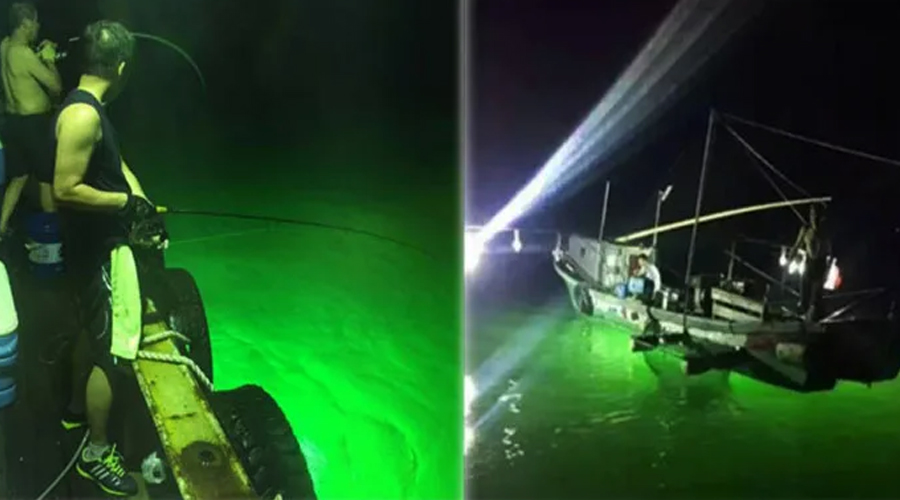

When choosing the right fishing LED light, consider practicality, environmental adaptability, functionality, and personal needs. Let’s explore the specific factors that should guide your choice.
How to Choose the Right Fishing LED Light?
1. Color Temperature (Kelvin)
Cool White Light (5000K-6500K):
Underwater fishing lights are close to daylight, offering excellent color rendering and clear observation of float movement, bait status, and underwater structures. They are suitable for most freshwater and saltwater fishing.
Warm Yellow Light (under 3000K):
Soft and non-glare, it reduces insect attraction and makes it more comfortable to watch the float for extended periods at night. However, its penetration is slightly weaker.
Dual Color Temperature Switchable Light:
This allows for both fine detail observation and eye protection, and is recommended for beginners.
2. Brightness (Lumens)
Basic requirements: A fishing light with a brightness of 300 lumens or higher (covering a 12-meter surface area);
For complex environments (strong winds and waves/long-distance casting): 500+ lumens is recommended, with a focusing cup design to focus the light beam on the float.
Note: Underwater lights with excessive brightness may scare fish and require a sunshade or dimming function.
3. Waterproofing (IP Rating)
IP65+: Completely dustproof and resistant to low-pressure water jets (suitable for light rain/spray);
IP67/68: Waterproof even after short-term immersion (suitable for boat fishing, heavy rain, or wading operations);
Special applications: For underwater lighting, choose a professional submersible-grade light (usually with a depth indicator). An example is the YFFY’s 240W/480W YFFY-AF240 Fishing LED Light.
Pitfall Avoidance Guide – Common Misconceptions Corrected
Myth 1: Brighter is Better
→ Excessive illumination of a fishing light can cause glare on the water surface, making it difficult to see the float’s movements. It’s recommended to choose a model with adjustable brightness.
Myth 2: Ignoring Heat Dissipation
→ LEDs generate heat over time, and low-quality plastic housings can easily deform. Prefer underwater fishing light with a metal heat sink and honeycomb ventilation holes.
Myth 3: Blindly Pursuing Low Prices
→ Products that cost 50% less than market price often use recycled batteries or have inflated lumen ratings, posing safety risks.
Product Display
Maintenance Tips
1️⃣ Regular Cleaning: Wipe the light housing with a soft cloth to prevent salt crystals/mud from clogging the light shield.
2️⃣ Storage Tips: Remove the battery when not in use for extended periods and store in a dry, cool place.
3️⃣ Emergency Repairs: Carry spare O-rings to prevent water ingress due to aging.
A good fishing LED light requires careful consideration of quality, warranty, safety, brightness, suitable waters, and suitable fish. We welcome your comments.