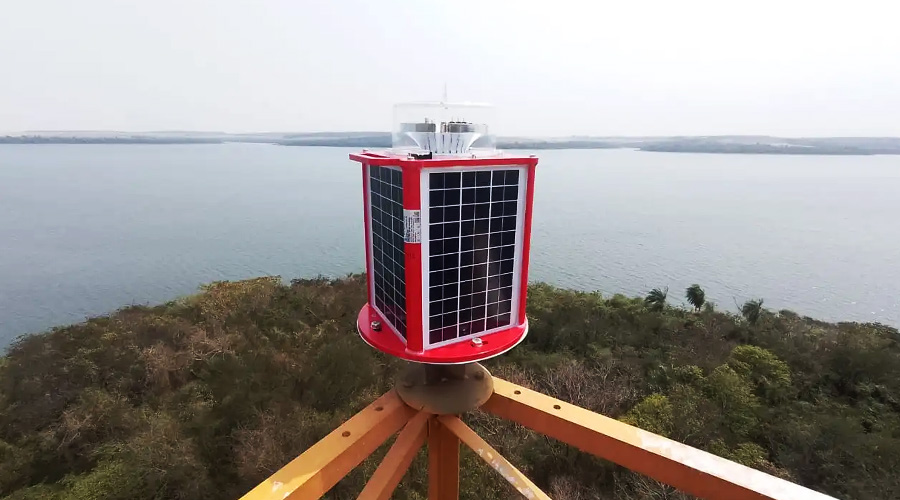
Solar-Powered Navigation Lights: Enhancing Maritime Safety Along Brazil’s Coastline
Along Brazil’s vast coastline, safe navigation depends on reliable maritime aids. A recent project we participated in, installing solar marine lanterns, has successfully enhanced maritime safety in this region.
This project isn’t just a successful product application—it’s a demonstration of modern maritime navigation principles.
As a leading manufacturer of solar-powered navigation lights, we understand that in extreme marine environments, the stability and performance of these lights are critical to ensuring navigational safety.
Why Solar Marine Lanterns Are Essential for Brazilian Waters
Brazil’s coastal waters present unique challenges, including a tropical maritime climate with abundant sunshine but significant salt spray corrosion. In addition, certain shipping lanes are far from shore, making it expensive to lay submarine cables and challenging to maintain traditional lighting systems. Solar warning lights provide an economical and reliable solution.
Key Benefits of Solar-Powered Navigation Lights in Brazil:
- Tropical climate: Abundant sunshine ensures optimal solar energy generation.
- Salt spray corrosion: Solar-powered lights are designed to withstand harsh marine environments.
- Remote locations: Solar power eliminates the need for costly submarine cable installation and maintenance.
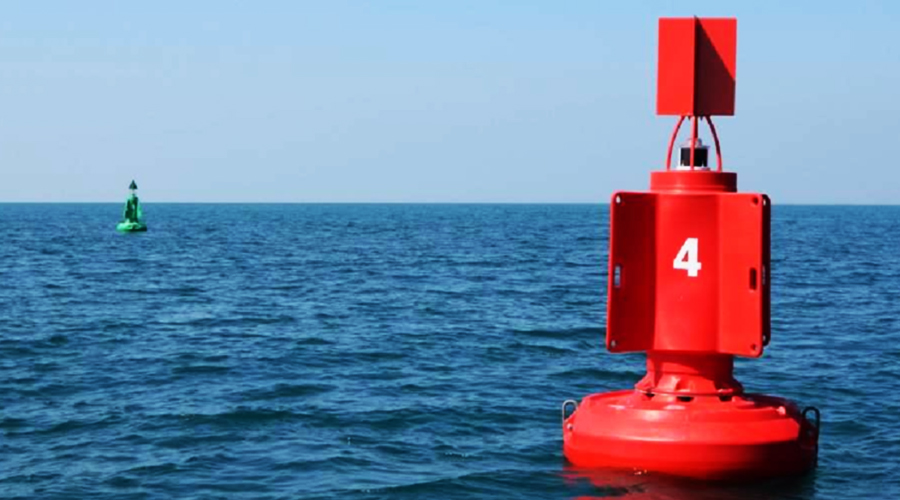
Key Specifications of Our Solar-Powered Navigation Lights
For this project, we deployed YFFY-LS-S 4-6NM solar marine lanterns (24AH). This model was specifically designed to endure harsh marine environments, with the following specifications:
- High-Brightness LED Optical System: Effective range of 4-6 nautical miles, suitable for medium to long-distance guidance.
- High-Capacity Battery (24AH): Ensures stable illumination for up to 10 days, even in continuous rain or severe weather.
- IP68 Protection Rating: Resistant to salt spray corrosion, wave impact, and high-temperature exposure.
- Customizable Features: GPS synchronization, dual-color options, and 350 customizable flashing codes.
Why This Solar Marine Lanterns System Works
The successful implementation of this project is based on three core principles:
1. Energy Independence & All-Weather Reliability
Traditional grid-powered lighting systems face challenges in remote coastal areas, including difficult installation and vulnerability to lightning.
Our solar marine lights achieves energy independence, with high-efficiency monocrystalline silicon solar panels and an intelligent charge-discharge management system. This ensures continuous operation without the need for external power sources, even during cloudy days.
2. Optical Penetration & Visual Recognition
In marine navigation, visibility is crucial, especially in complex weather conditions. Our high-transmittance PC material lampshade and focusing optical lens ensure that the light meets IALA standards, maintaining high visibility even in rain, fog, and waves.
Red-colored lights, often used for marking hazardous areas, enhance visual recognition, reducing the risk of navigational errors.
3. Corrosion Resistance & Long Lifespan
In coastal environments with high salt content, corrosion resistance is critical. Our solar navigation lights use UV-resistant engineering plastics and marine-grade aluminum alloys.
After undergoing a 72-hour salt spray test, the lights are built to last up to 58 years with minimal maintenance, significantly reducing Total Cost of Ownership (TCO).

Frequently Asked Questions About Solar Marine Navigation Lights
Based on our experience, we’ve answered some common questions that overseas contractors and port management teams frequently ask:
Q1: How long can the solar-powered navigation lights function during cloudy or rainy days?
Our 4-6NM 24AH model uses Maximum Power Point Tracking (MPPT) technology to optimize charging efficiency.
Under standard configuration, it can provide uninterrupted nighttime illumination for 7-10 consecutive days without sunlight, far exceeding international safety standards.
Q2: How do you ensure compliance with international maritime regulations?
All of our solar marine navigation warning lights meet IALA and CCS certifications, ensuring they comply with global maritime standards. This guarantees that our lights meet the necessary requirements for international bidding and acceptance stages.
Q3: Is remote monitoring and maintenance easy to manage?
Yes! For large-scale projects, we offer a Remote Telemetry Unit (RTU) that allows real-time monitoring of each light’s battery voltage, charging/discharging status, LED operation, and location from a control center. This proactive monitoring helps reduce maintenance costs by identifying potential issues before they become major problems.
Q4: What is the significance of the 350 flashing code functions?
These codes allow the lights to meet IALA‘s strict flashing requirements for different applications (e.g., channel markers, isolated hazards, and no-anchoring zones).
It helps prevent signal confusion in busy waters and allows flexibility in the design and usage of each light, all without requiring hardware replacement.
Q5: How does the GPS synchronization function work?
The GPS synchronization function uses satellite timing to ensure multiple navigation lights flash in sync, reducing interference and helping mariners identify channels and hazards more easily.
This feature also eliminates the need for costly synchronization cables, reducing installation and maintenance costs.
Conclusion: A Trusted Solution for Global Maritime Safety
The successful installation of solar marine lanterns along Brazil’s coastline proves their reliability and effectiveness in extreme marine environments. Whether it’s busy commercial ports or remote waters, our lights offer consistent safety benefits.
If you are planning port renovations, channel marking, or need navigational aids for marine boats, yachts, offshore, buoys,docks, ports, docks and wind farms, contact our technical team today. We offer a variety of solar-powered warning lights tailored to your needs.