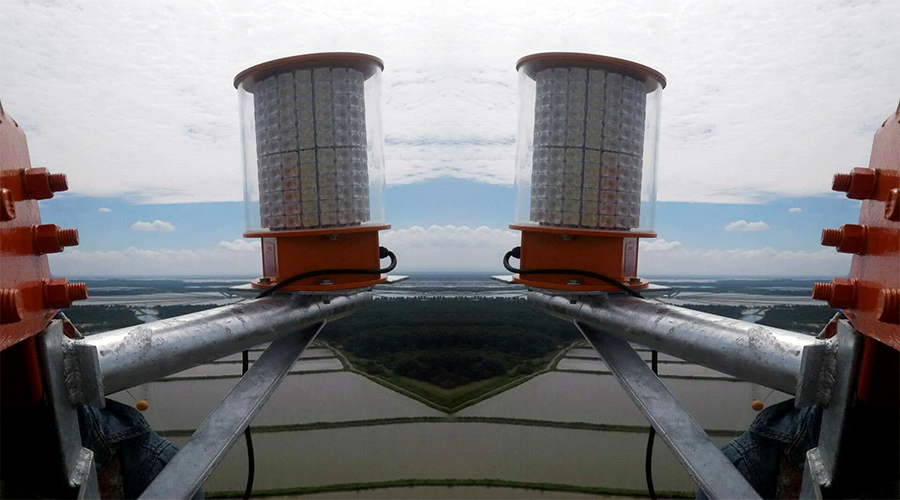
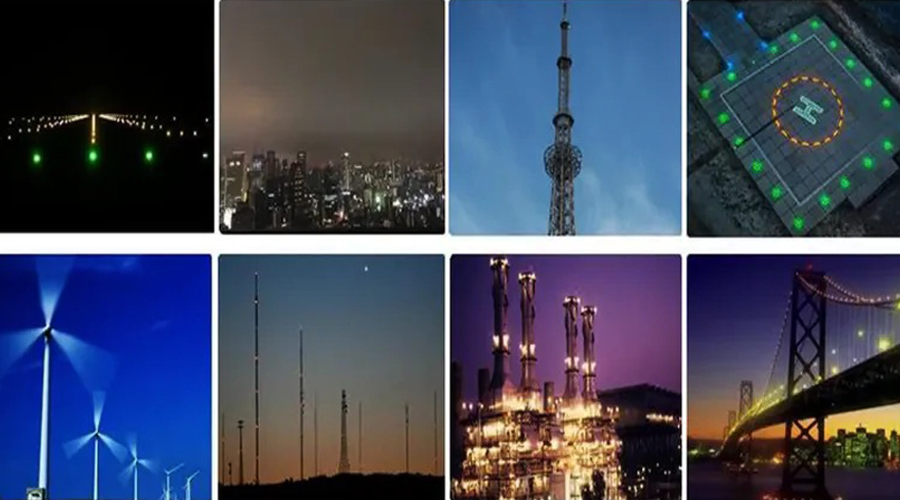

Aviation obstruction lights are classified according to their light intensity, light color, flashing mode and frequency.
These classification standards are crucial to aviation safety, ensuring that pilots can clearly identify obstacles and avoid potential dangers. In addition, the standards of different countries and regions may vary slightly, and the selection of appropriate aviation obstruction light requires reference to local regulations.
Classification of Aviation Obstruction Lights
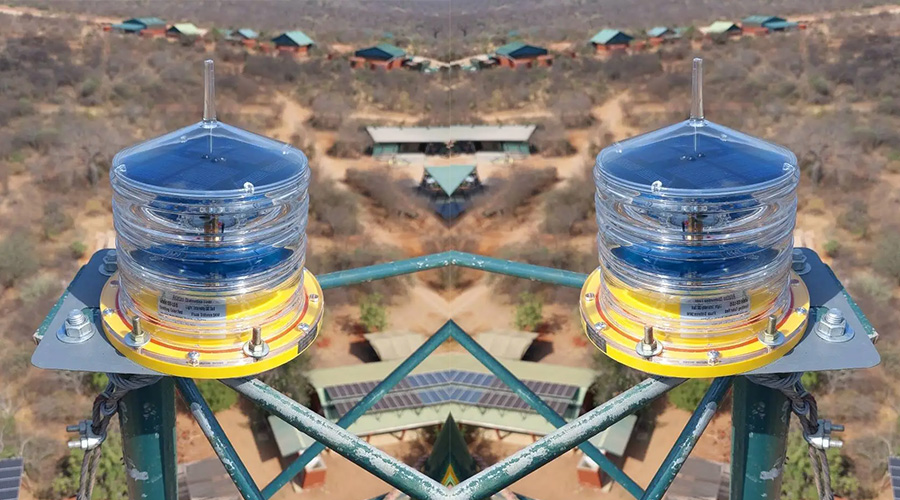
Aviation obstruction warning lights, also known as navigation lighting equipment, are obstruction lighting equipment that identifies obstacles and belong to the navigation lighting equipment industry.
The function of aircraft warning lights is to display the outline of structures so that aircraft operators can judge the height and outline of obstacles and serve as a warning.
According to Annex 14 of the International Standards and Recommended Practices for Aerodromes issued by ICAO, MH/T6012-2015 [1], obstacle lights are divided into three categories: low intensity, medium intensity and high intensity:
1. Low intensity obstruction lights
They are constant light, red, and have a peak light intensity greater than 32.5cd. They are generally not used alone, but must be used in conjunction with medium intensity or high intensity obstruction lights.
If buildings and facilities over 45 meters are equipped with multiple layers of medium-intensity or high-intensity obstacle lights, low-intensity obstacle warning lights can be installed between medium-intensity or high-intensity obstacle lights.
(Low-intensity obstacle lights are red, with an effective light intensity of 100cd±25%)
2. Medium-intensity obstacle lights
Are divided into three types according to lighting requirements:
a. Medium-intensity A-type obstacle warning lights are white flashing lights with an effective light intensity of 20,000cd-2,000cd, which are used for buildings and facilities over 105 meters and obstacles with strong background light or used in conjunction with high-intensity B-type light variable light.
b. Medium-intensity B-type obstacle lights are red flashing lights with an effective light intensity of 2,000cd±25%.
C. Medium-intensity C-type high-altitude obstacle warning lights are red constant light with an effective light intensity of 2,000cd±25%.
3. High-intensity aircraft warning lights are divided into two types according to the lighting requirements:
a. High-intensity A-type aviation lights are white flashing lights, and they flash with variable intensity all day long during the day, dusk or dawn, and at night. The effective light intensity is 200,000cd±25% during the day;
- 20,000cd±25% at dusk or dawn;
- 2000cd±25% at night;
It is mainly used for buildings and facilities over 150 meters, or used in conjunction with medium-intensity obstruction lights.
b. High-intensity B-type obstruction lights are white flashing lights, and they flash with three layers of variable intensity all day long during the day, dusk or dawn, and at night. The effective light intensity is 100,000cd±25% during the day;
- 20,000cd±25% at dusk or dawn;
- 2000cd±25% at night. It is mainly used to mark wires, cable towers, and high-voltage transmission line towers.
If you have any needs or questions about aviation obstruction lights, please feel free to contact us to provide you with more solutions.