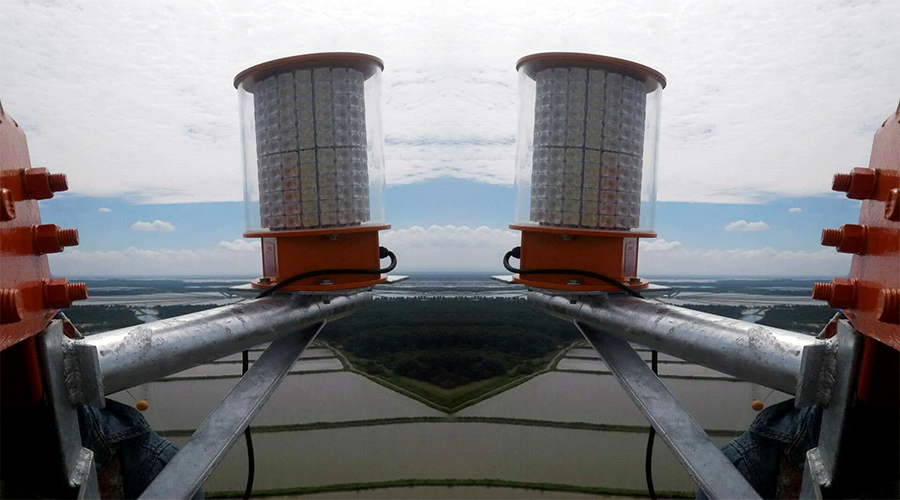
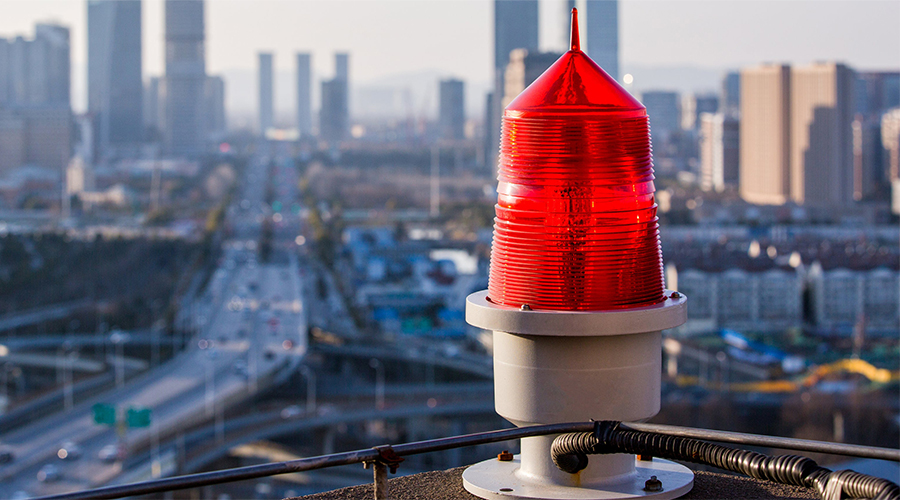

Aircraft warning lights are specialized lighting fixtures installed on high-rise buildings, structures, or obstacles to warn pilots of potential obstructions. Their core characteristics are:
1. High brightness & strong flash:
Capable of being clearly identifiable by pilots under various lighting conditions, including daytime, dusk, and nighttime.
2. Specific light color:
The International Civil Aviation Organization (ICAO) and national aviation authorities (such as the FAA in the US and the CAAC in China) typically stipulate the use of aviation red or high-intensity white as the standard light color to ensure clear differentiation from other ground lights (such as navigation lights and city lights).
3. Reliable lightning & electrical protection:
Aviation obstruction warning lights are usually installed at the highest point of buildings, making them highly susceptible to lightning strikes; therefore, they must have comprehensive surge and lightning protection circuitry.
4. Adaptability to harsh environments:
Aircraft warning lights need to operate stably for extended periods under extreme weather conditions (such as strong winds, heavy rain, snow, high temperatures, high humidity, salt spray, etc.), possessing a high level of protection (IP rating typically reaching IP65 or higher).
5. Long lifespan & low energy consumption:
Modern high-altitude obstruction lights generally use LEDs as the light source, with a lifespan of tens of thousands of hours. Their energy consumption is far lower than traditional incandescent or xenon lamps, significantly reducing maintenance costs and energy consumption.
6. Intelligent control & networking:
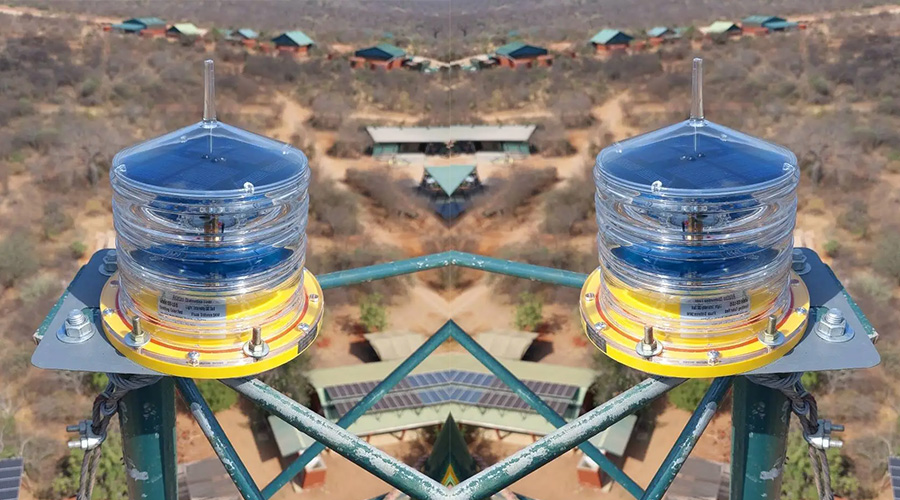
Solar-powered aviation obstruction light systems integrate photosensors, enabling automatic charging during the day and automatic discharging at night based on ambient light levels.
Classification and Application of Aircraft Warning Lights
By Light Intensity:
Aviation lights are generally classified into three types: low, medium/high intensity.
| Type | Light Intensity Range | Colors & Modes | Applications & Requirements |
| Low-intensity Obstruction Lights | < 32 candela (cd) | Aviation Red (Constant Emission)(60-90) Flashes/min | 1. For obstacles no higher than 45m above ground level. 2. Must be installed if the obstacle exceeds the shielding surface of surrounding obstacles. 3. Commonly used for utility poles, small iron towers, rooftop platforms, etc. |
| Medium-intensity Obstruction Lights | Daytime:20,000 cd | Aviation Red (Flash) or White (Flash)(20-60) Flashes/min | 1. Medium-intensity white (flash): Suitable for buildings/structures 45 to 150m above ground level. 2. Medium-intensity red (flash): Can be used as an alternative or supplement to high-intensity white obstruction lights for buildings of similar height, or in areas where the use of white lights is restricted in specific airspace. |
| Dusk/Dawn:2,000 cd | |||
| Night:<2,000 cd | |||
| High-intensity Obstruction Lights | Daytime:200,000 cd | White (Flash) (40-60 Flashes/min) | 1. Suitable for massive obstacles 150m above ground level, such as skyscrapers, large TV towers, and wind turbine blades. 2. Extremely high light intensity, ensuring clear visibility from tens of kilometers away. |
| Dusk/Dawn:2,000 cd | |||
| Night:2,000 cd |
By Installation Location & Function:
1. Type A Obstruction Light (Top Light):
Installed at the highest point of an obstacle to indicate its overall height and location.
2. Type B Obstruction Light (Mid-Level Light):
For very tall or wide-spanning obstacles (such as bridges, chimneys, and rows of wind turbines), it needs to be installed at the mid-height or multiple protruding points to indicate its outline and scale.
3. Type C Obstruction Light (Overhead Line Marking Ball):
Specifically used to mark linear obstacles such as power lines and cables. It is usually spherical or an aviation marking ball, with alternating aviation orange and white colors.
Applications of Obstruction Lights:
Aviation obstruction lights are ubiquitous. They are required for any fixed or moving object that may pose a threat to aircraft flight safety.
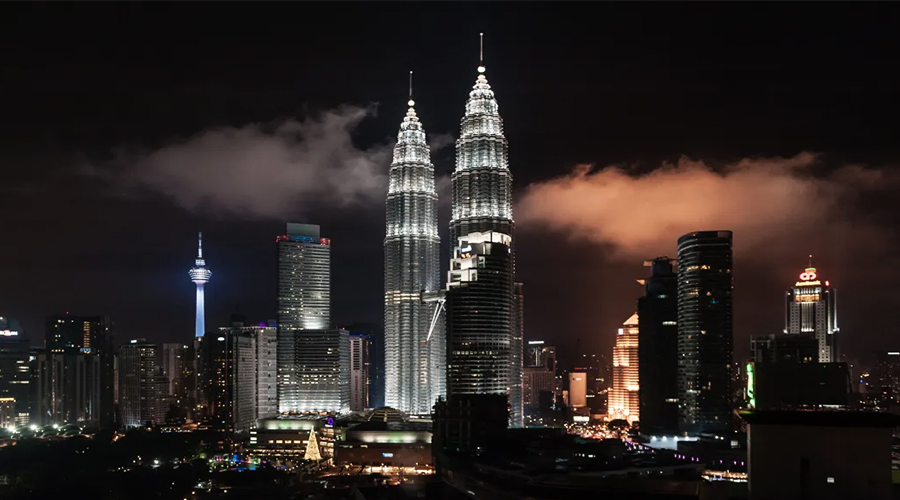
1. High-Rise Buildings & Structures:
- Skyscrapers, office buildings, residential buildings
- TV towers, communication towers, chimneys
2. Transportation Infrastructure:
- Bridges: such as the towers and main cables of suspension bridges.
- Airport perimeter facilities: such as terminals, radar stations, and buildings near runways.
- High-voltage transmission towers: especially high-voltage lines crossing valleys or shipping lanes.
3. Energy facilities
- Wind turbines: This is an important application area for modern obstruction warning lights. Due to the high tip height and constant movement of wind turbine blades, high-altitude obstruction lights must be installed on the nacelle roof and blades.
- Oil drilling platforms: Platforms located near shipping lanes at sea.
4. Others
- Crane: Especially tower cranes in ports or construction sites, requiring temporary or permanent LED or solar-powered obstruction lights when their height exceeds the surrounding environment.
- Monuments, wind measurement poles, etc.
Aircraft warning lights are indispensable “ground beacons” in the modern aviation safety system. Their high strength, high reliability, intelligence, and standardization ensure effective warning functions in various complex environments.
Welcome contact us to get more details of aviation light and obstruction lights etc!