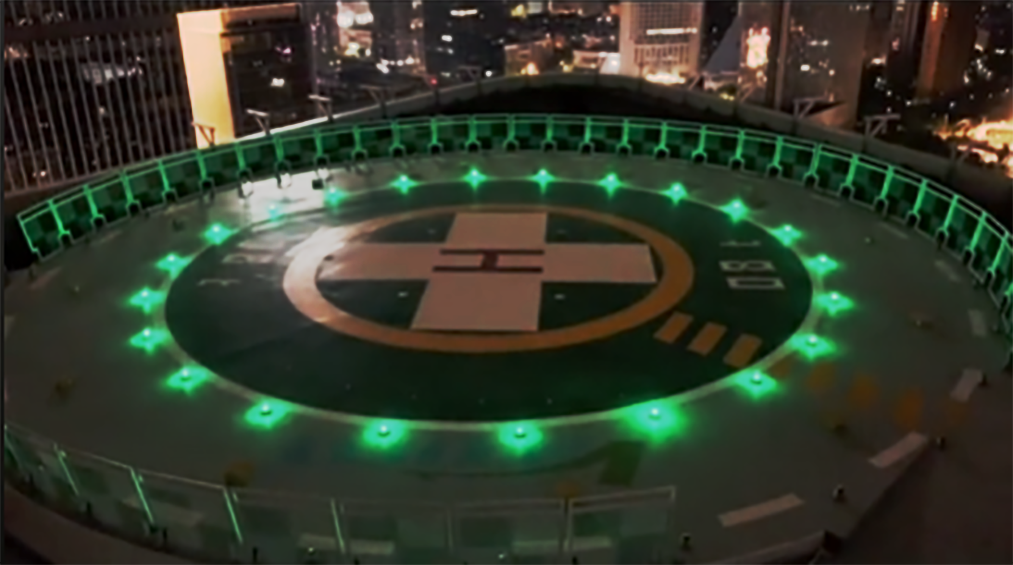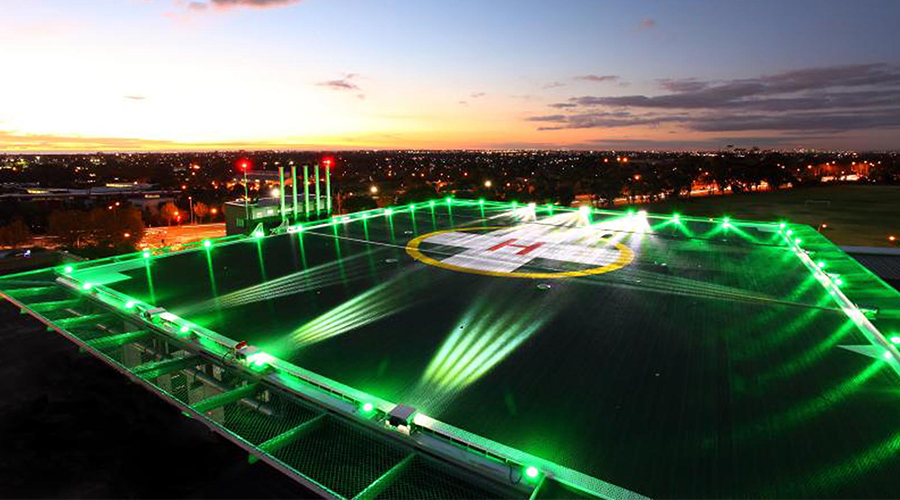
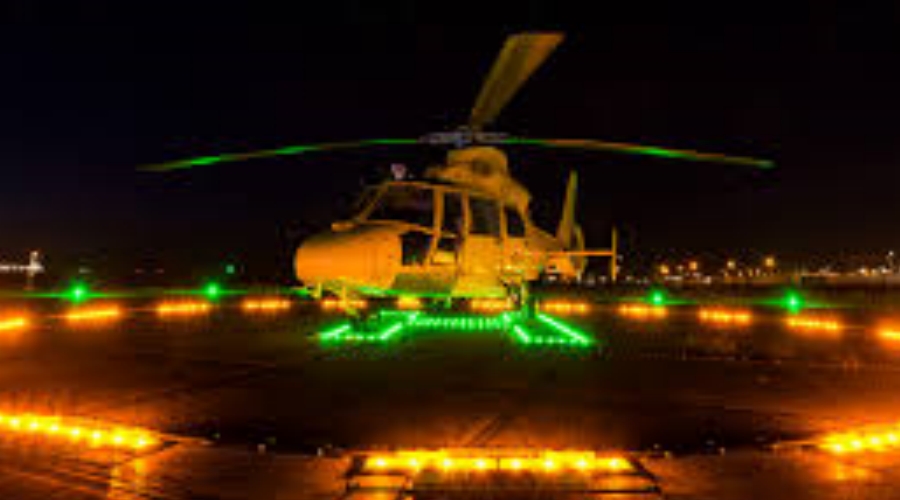
Helicopter embedded perimeter lights are a type of lighting equipment designed specifically for helipads. It usually uses an aluminum gravity-cast housing with good waterproof and heat dissipation properties.
The helipad lights use light-emitting diode (LED) light sources inside, and are designed with advanced optical glass to ensure that the emission angle meets the standards of the Federal Aviation Administration (FAA).
The parameters of this Led lights include embedded pit size, weight, light source life and main body material, such as a light-emitting angle of 180 degrees, a minimum embedded pit size of 206 mm*145 mm, a net weight of 4.5 kg, a light source life of greater than or equal to 20 years, and a main body material of PC.
The Function of Helicopter Embedded Perimeter Lights
- The role of embedded perimeter light is mainly to clearly mark the boundaries of the helipad touchdown and takeoff areas at night or during the day when visibility is low.
- The lights of these airport lights are embedded along the edges of the helipad touchdown and takeoff areas, emitting omnidirectional green constant light signals, which help pilots safely identify and navigate the safe areas of the helipad.
- This design can also reduce potential threats to helicopter flight safety, as lights above the surface may endanger the operation of helicopters under certain circumstances.
Requirements For Helicopter Perimeter Lights
The color and layout of the helipad embedded perimeter lights need to follow specific aviation safety standards to ensure the safe takeoff, landing and navigation of helicopters.
Color Requirements
Green light source: usually used to mark the boundaries of the touchdown and takeoff areas. Green is an international standard indicator color that can effectively guide pilots.
White light source: may be used for overall lighting to increase night visibility.
Layout Requirements
- Even distribution: The lights should be evenly arranged along the edge of the heliport to ensure that the entire boundary is visible at night and easy for pilots to identify.
- Spacing requirements: The distance between lights needs to be determined according to the size and design standards of the specific airport, and usually follows the regulations of the International Civil Aviation Organization (ICAO) or the civil aviation management agencies of various countries.
- Height & angle: The embedded lights must be below the ground to avoid obstacles to the takeoff and landing of helicopters, and the light should not be blocked by soil, weeds or other obstacles.
Helicopter embedded perimeter lights need to be waterproof and impact-resistant to adapt to various climatic conditions and ground conditions. And consider the ease of maintenance of the apron lights so that they can be quickly replaced in case of failure and maintain continuous normal operation.
Helicopter Embedded Perimeter Lights Application Effects
FAQ About Helipad Embedded Perimeter Lights
Q 1: What Are Helicopter Embedded Perimeter Lights and What is Their Main Function?
- Helicopter embedded perimeter lights are specialized lighting equipment designed specifically for helipads. Their primary function is to clearly mark the boundaries of the touchdown and lift-off (TLOF) area at night or during the day when visibility is low.
- Installed flush along the edges of the helipad, these lights emit an omnidirectional steady green light signal to help pilots safely identify and navigate to the landing area. Because they are fully embedded in the ground, this design eliminates the potential flight safety hazards that surface-mounted lights might otherwise pose to helicopter operations.
Q 2: What Are the Specific Color and Layout Requirements For These Embedded Perimeter Lights?
- To ensure safe helicopter takeoffs, landings, and navigation, the color and layout must strictly follow aviation safety standards (such as ICAO regulations or national civil aviation authorities):
- Color Requirements: A green light source is standard for marking the boundaries of the touchdown and lift-off areas, serving as an international indicator to guide pilots. A white light source may also be utilized for general illumination to increase overall nighttime visibility.
- Layout & Spacing: The lights must be evenly arranged along the perimeter of the helipad to ensure the entire boundary is easily recognizable. The exact spacing depends on the specific size and design standards of the helipad.
- Height & Angle: The lights must remain below ground level to avoid becoming obstacles for helicopters, and their light distribution (typically a 180-degree emission angle) must not be obstructed by soil, weeds, or other debris.
FAQ 3: What Are the Physical Characteristics and Material Advantages of These Embedded Perimeter Lights?
- These lights are engineered to withstand harsh outdoor and ground conditions, featuring the following specifications:
- Materials & Housing: They typically feature an aluminum gravity-cast housing with a PC (polycarbonate) main body and advanced optical glass, providing excellent waterproof, heat dissipation, and impact-resistant properties.
- Light Source Life: They utilize an internal LED light source with an exceptionally long lifespan of 10 years or more.
- Installation Parameters: The unit has a net weight of 4.5kg and requires a minimum embedded pit size of 206mm × 145mm. Additionally, they are designed for easy maintenance so that they can be quickly replaced in the event of a failure, ensuring continuous helipad operations.